A doorknob through the wall, a crack running across the ceiling or a brown stain left by an old leak makes a whole room look neglected. Patch kits from the hardware store promise a quick fix, but the result rarely blends in. A patch you can see can look worse than the hole it covers.
Good drywall repair is invisible once it's painted. This guide explains how the service works, what we fix, why some repairs take more than one visit, and how to prepare.
What our drywall service is, and what it isn't
We repair damaged drywall so the surface is smooth, solid and ready for paint.
We repair existing drywall only. We don't install new drywall, so new walls, basement finishing and renovations are jobs for a dedicated drywall crew.
How the service works
- You call us. Tell us what the damage is, how big it is and where. A photo helps.
- We give you an estimate. You'll know roughly how long the job will take and what it will cost before you book.
- We protect the room. Floors and furniture are covered before any cutting or sanding.
- We cut out the damage. Weak, crumbling or wet material is removed back to solid drywall.
- We fit a patch. It's fastened to backing so the repair is as strong as the wall around it.
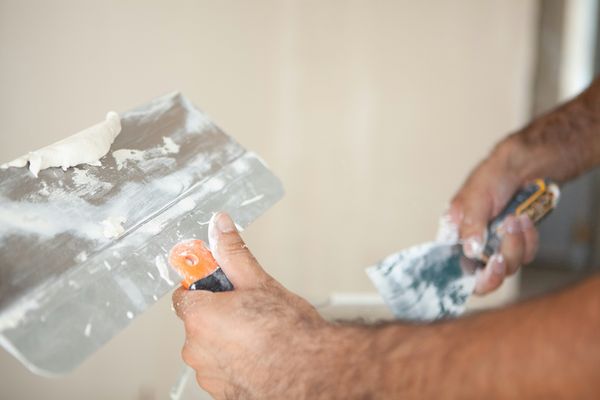
- We tape and apply compound. In several thin coats, each one wider than the last.
- We sand it smooth. The edges are feathered until the repair is flush with the wall.
- We prime and paint, if you'd like us to finish the job.
What we fix
Holes. From doorknobs, wall anchors, furniture and accidents, in any size.
Cracks. In walls and ceilings, including cracks that keep coming back along a seam.
Water damage. Stained, soft or sagging sections cut out and patched once the leak is fixed.
Nail pops and dents. The small bumps and marks that show up in every home.
Loose or bubbling tape. Seams that have lifted or split.
Access holes. Openings left behind after plumbing or electrical work.
Damaged corners. Dented or crushed corners rebuilt and finished.
Why a repair can take more than one visit
Drywall compound has to dry between coats. A small patch can often be done in one visit with a fast-setting compound. A larger repair usually needs two or three coats, and each coat must dry before the next one goes on. Rushing it leads to cracks and a patch that shrinks and shows later. For bigger repairs, we'll tell you up front if a short return visit is needed for the final coat, sanding and paint.
Why patches show, and how we avoid it
- Edges that aren't feathered. A patch needs compound spread well beyond the hole so there's no visible ridge.
- Too little sanding. Any bump or tool mark shows through paint, especially in side light.
- No primer. Fresh compound absorbs paint differently, leaving a dull patch called flashing.
- Mismatched texture. A smooth patch on a textured ceiling stands out.
- Spot painting. Old paint fades, so a small painted square can show. Painting the whole wall gives the best match.
Water damage: fix the leak first
A water stain is a symptom. If the leak isn't repaired, the patch will stain and soften just like the old drywall. The source needs to be fixed and the area needs to be fully dry before the wall is closed up. If the drywall has been wet for a while, we check the material behind it too. We can repair the leak and the drywall in the same job.
How to prepare for your visit
- Move furniture away from the area. We'll cover what stays in the room.
- Take down pictures and shelves near the repair.
- Find your leftover paint. The can, or the colour name and code, helps us match the finish.
- Tell us about the cause. Especially for cracks and water stains.
- Point out every spot. Having several repairs done in one visit is the best use of your time.
Why homeowners call The Man on Call
The Man on Call is a locally owned home services company based in Newmarket, serving homeowners across the GTA. We take pride in work you can't see once it's done.
For drywall, that means a repair that disappears under paint and a room left free of dust. We arrive when we say we will, tell you what the job will cost before we start, and cover your floors and furniture before we sand.
Because we also handle plumbing and painting, one team can take the job from start to finish: fix the leak, repair the drywall and paint the wall.
Hole in the wall?
Tell us what needs fixing, and we'll give you an estimate and a time that works for you. Call The Man on Call and we'll make it disappear.